
How to Build a Lead Attribution Model for Service Businesses When Enquiries Have Multiple Touchpoints
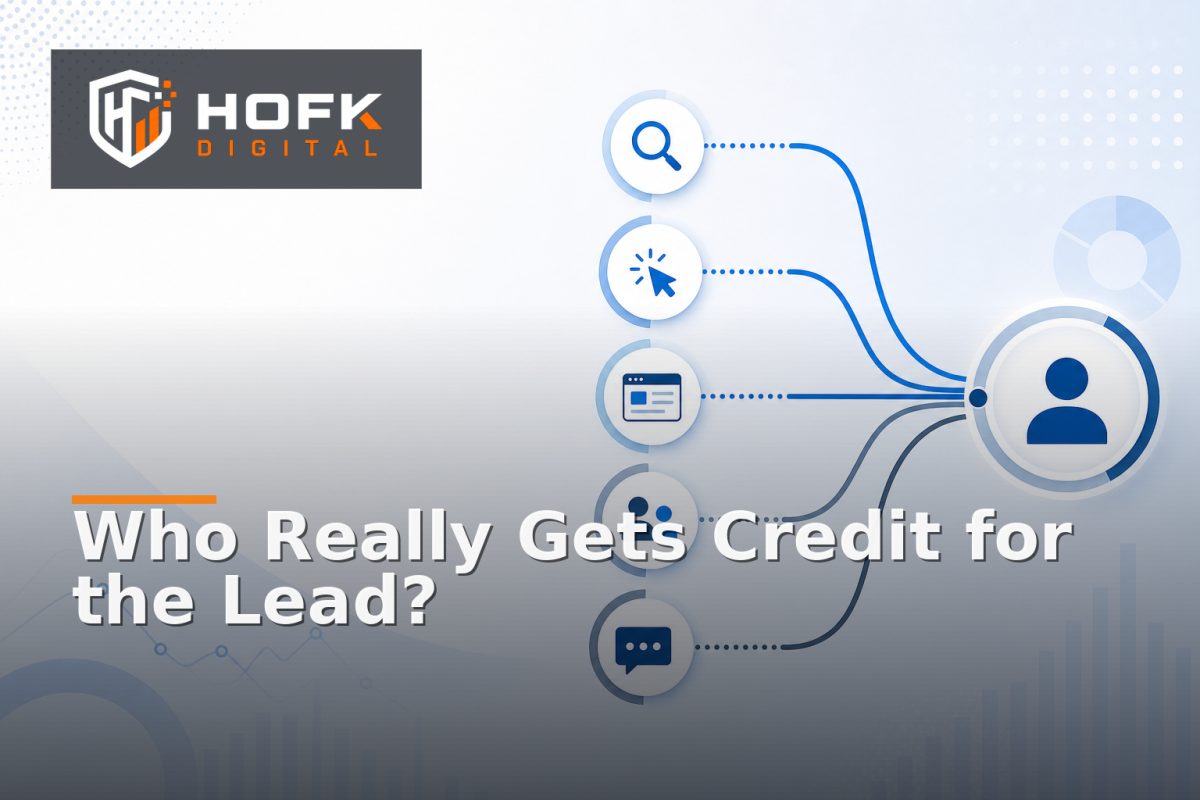
A prospective client may read a service page, return through an organic search result, download a guide, click a Google Ads advert and then speak to someone before submitting an enquiry. If your reporting gives all the credit to the final form submission, it hides most of the journey.
That is why a lead attribution model for service businesses needs to do more than record the last source. It should show which channels introduced the prospect, which helped them evaluate the service and which influenced the eventual enquiry or sales opportunity.
This guide explains how to design a practical model for UK service businesses. It focuses on marketing attribution, CRM lead source tracking and multi-touch attribution for leads without pretending that every touchpoint can be measured perfectly.
Why single-source attribution gives service businesses a distorted view
Single-source reporting is attractive because it is simple. A CRM record has one field called “lead source”, so the business reports enquiries by that value. The difficulty is that one field cannot describe a buying journey that may last weeks or months.
Last-click attribution often favours:
- Branded searches, because prospects search for the company after hearing about it elsewhere.
- Direct traffic, because tracking parameters have been lost between visits.
- Referral or sales activity, because the final measurable interaction happened offline.
- Retargeting adverts, because they appear late in the decision process.
None of those sources is necessarily unimportant. They are simply being credited for more of the outcome than the data can justify.
Define the commercial outcome before choosing a model
Attribution should support a business decision. Before choosing first-touch, last-touch or multi-touch attribution, agree what the model is meant to explain.
Possible outcomes include:
- Which channels create new enquiries?
- Which campaigns create marketing-qualified leads?
- Which sources influence sales-accepted opportunities?
- Which activity contributes to won revenue?
- Which channels introduce demand but need support from other touchpoints?
These are different questions. A channel that creates many form submissions may produce few suitable opportunities. Another may generate fewer leads but a higher proportion of commercially relevant conversations.
For a service business, it is usually more useful to report attribution at several stages: enquiry, qualified lead, opportunity and won work. This avoids optimising marketing around volume alone.
Build the data foundation before calculating credit
A sophisticated attribution model cannot compensate for missing or inconsistent data. Start by agreeing the identifiers and fields that connect the journey.
Use a stable lead and opportunity ID
Every enquiry should receive a stable CRM record ID. If the enquiry becomes an opportunity, preserve the relationship rather than creating an unrelated record. Where several contacts belong to one organisation, define how the account and opportunity are joined.
Capture the first and latest known source
Keep separate fields for the first known source and the latest meaningful source. For example, a prospect may first arrive through an organic search result but return later through a paid campaign. Overwriting the original source removes useful context.
Store campaign detail where it remains usable
Where appropriate, capture UTM values, click IDs, landing page, referrer, campaign, ad group and content variation. The exact fields will depend on the advertising and analytics setup. VERIFY: confirm which parameters your CRM, consent configuration and marketing platforms can retain reliably.
Record offline touchpoints
Phone calls, networking events, email conversations, sales meetings, webinars and referrals may influence a service enquiry without producing a trackable web event. Create consistent CRM activity types for these interactions instead of leaving them in free-text notes.
A practical lead attribution model for service businesses
For many service businesses, a useful starting model combines three views rather than forcing one “correct” answer.
1. First-touch attribution: who introduced the prospect?
First-touch attribution assigns credit to the earliest known marketing interaction. It is useful for understanding demand creation and which channels help people discover the business.
Its limitation is that it can over-credit broad awareness channels. A first visit may introduce the company, but several later interactions may be needed before the person is ready to enquire.
2. Lead-creation or last meaningful touch: what prompted the enquiry?
This view focuses on the touchpoint closest to the conversion, while excluding unhelpful technical events such as a confirmation-page reload. It can help assess the landing page, campaign or referral that generated the enquiry.
Its limitation is that it may undervalue earlier research and trust-building activity.
3. Even-weighted multi-touch attribution: what role did the journey play?
An even-weighted model gives equal credit to the recorded touchpoints in a defined period. If four meaningful interactions are recorded, each receives 25 per cent of the credit.
This is easy to explain and useful when there is not enough historical data to justify more complex weighting. It is not a statement that every touchpoint had exactly equal influence. It is a transparent starting assumption.
Using all three views together gives decision-makers more context: first touch shows introduction, lead creation shows conversion proximity, and multi-touch shows the wider journey.
Choose which touchpoints are meaningful
Counting every page view will make the model look precise while reducing its usefulness. Define which interactions qualify as meaningful touchpoints.
Possible qualifying events include:
- A non-branded paid or organic landing visit.
- A relevant service page view with engaged interaction.
- A guide, webinar or downloadable resource completion.
- A return visit from a tracked campaign.
- A completed contact, consultation or quote request.
- A sales email response, meeting or recorded referral.
Do not automatically count every impression, page refresh or low-intent visit. The threshold should reflect the buying process and the data you can collect consistently.
Set a lookback window that matches the sales cycle
A lookback window defines how far back the model searches for relevant interactions before an enquiry or opportunity. A short window may miss early research. A very long window may credit unrelated activity.
Consider:
- Typical time from first visit to enquiry.
- Typical time from enquiry to sales opportunity.
- Whether repeat customers should be treated differently from new prospects.
- Whether a long-running account should start a new attribution journey for a new service.
For a short sales cycle, a 30-day window might be a reasonable test. For considered B2B services, a longer period may be more appropriate. VERIFY: choose the window using your own CRM history rather than applying a universal benchmark.
Weight quality and pipeline, not only lead volume
Attribution becomes commercially useful when it follows the outcomes that matter. Add fields that allow the business to compare attributed enquiries with qualification and sales progression.
Useful measures include:
- Enquiry count.
- Percentage meeting the agreed qualification criteria.
- Sales acceptance rate.
- Opportunity creation rate.
- Pipeline value.
- Won revenue, where the sample and data quality support the comparison.
- Disqualification reasons.
Be careful with revenue attribution when deal values, margins and sales cycles vary widely. A small number of wins can make a channel appear exceptional for a short period. Use a suitable reporting period and explain uncertainty rather than presenting a fragile result as fact.
Handle missing attribution without pretending it is known
Some leads will have incomplete source data. Consent choices, privacy controls, call enquiries, forwarded emails and untagged links can all create gaps.
Do not assign an invented source simply to make the report complete. Use clear categories such as “unknown”, “offline referral”, “direct/unattributed” or “existing customer”. Then report the size of the unknown group.
A high proportion of unknown records is not merely a reporting inconvenience. It is a signal that CRM handoffs, forms, call tracking or campaign tagging need attention.
Use CRM stages to prevent attribution from stopping at the form
Marketing attribution should not end when the form is submitted. Connect the original lead record to the stages that follow it.
At minimum, define how the CRM records:
- New enquiry.
- Initial review.
- Marketing-qualified or suitable lead.
- Sales-accepted lead.
- Opportunity or proposal.
- Won, lost or disqualified outcome.
Keep stage definitions clear. If one salesperson marks a record as qualified after a short conversation and another waits until a proposal is requested, the attribution comparison becomes inconsistent.
Compare models before making budget decisions
Do not choose a channel based on one attribution view. Create a simple comparison showing first touch, lead-creation touch, even-weighted credit and qualified or won outcomes.
For example, paid search may appear strongest under last-touch attribution, while organic content may introduce more opportunities under first-touch reporting. Neither view automatically proves causation. It shows that the channels play different roles.
Use the comparison to ask better questions:
- Are we underfunding channels that introduce suitable prospects?
- Are late-stage campaigns receiving credit for demand created elsewhere?
- Which sources produce enquiries that sales accepts?
- What data would change our confidence in this conclusion?
Review the model with sales and marketing together
Attribution should not be designed by the analytics owner alone. Marketing understands campaign structure, sales understands real buying journeys, and operations may understand whether a lead can actually be delivered profitably.
Review a sample of real enquiries and ask:
- Does the recorded journey resemble what the prospect described?
- Are important offline interactions missing?
- Are duplicate CRM records splitting one opportunity?
- Are disqualification reasons being recorded consistently?
- Does the model encourage any behaviour that damages lead quality?
This qualitative review helps prevent false confidence from clean-looking dashboards.
A practical implementation checklist
- Define the commercial stages you want to measure.
- Agree stable lead, account and opportunity identifiers.
- Preserve first-known and latest meaningful source separately.
- Capture campaign parameters where consent and tooling allow.
- Record offline sales and referral touchpoints consistently.
- Define meaningful interactions and a lookback window.
- Compare first-touch, lead-creation and even-weighted views.
- Report qualified leads and opportunities alongside enquiry volume.
- Show unknown and unattributed records honestly.
- Review a sample of real journeys with sales and marketing.
Where HOFK can help
Attribution often crosses responsive landing pages, forms, analytics, CRM fields, Google Ads and operational workflows. HOFK can support businesses with SEO and Google Ads support, ecommerce, full stack development, automation and monitoring where the measurement problem sits across several systems.
The useful work may involve clarifying the event model, improving CRM lead source tracking, preserving campaign data through a form or redirect, or connecting marketing activity with the sales stages that matter. The goal is not to create a complicated dashboard for its own sake. It is to make performance decisions more evidence-based.
Conclusion
A reliable lead attribution model for service businesses does not need to claim that every conversion can be explained perfectly. It needs clear definitions, stable identifiers, honest handling of missing data and reporting that connects marketing touchpoints to qualified pipeline.
Start with first touch, lead-creation touch and an even-weighted multi-touch view. Then improve the model as CRM data, offline activity and sales-stage reporting become more consistent. That gives UK marketing managers and founders a more realistic view of what creates demand, what supports consideration and what contributes to a commercially useful conversation.
Frequently asked questions
What is a lead attribution model for service businesses?
It is a defined method for linking marketing and sales touchpoints to enquiries, qualified leads, opportunities or won work. It helps a service business understand the different roles channels play in a longer buying journey.
Which attribution model should a service business use?
There is no universal best model. A practical starting point is to compare first touch, lead-creation touch and even-weighted multi-touch attribution, then review the results against qualified leads and pipeline.
What is multi-touch attribution for leads?
Multi-touch attribution gives credit to more than one interaction in the journey before an enquiry or opportunity. Credit may be divided equally or weighted according to agreed rules.
What should CRM lead source tracking record?
Useful fields include first-known source, latest meaningful source, campaign details, landing page, lead ID, opportunity relationship and relevant offline interactions. The exact fields depend on the CRM and consent setup.
How should unknown or unattributed leads be handled?
Keep them in a clear unknown or unattributed category rather than assigning a source without evidence. Report the size of this group because it highlights where tracking or CRM handoffs may need improvement.