

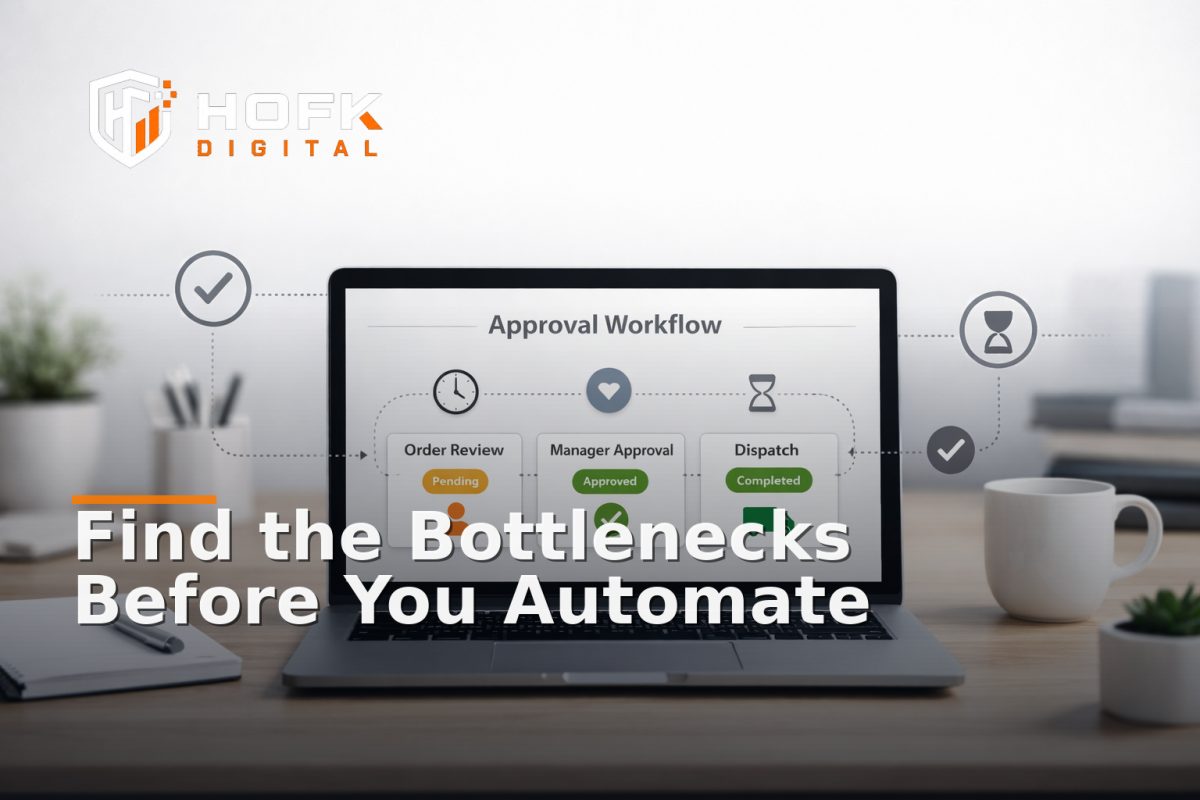
How to Audit Ecommerce Promotion Approval Bottlenecks Before Automating Them
If your promotion sign-off still depends on emails, Slack messages and someone remembering to chase the right manager, the problem is probably not the promotion itself. It is the approval path.
Before you invest in manual approval workflow automation, it is worth auditing where the process actually slows down. In ecommerce, promotion approvals often sit between merchandising, trading, marketing and operations, so a small delay can affect launch timing, stock movement and channel consistency.
This article is for ecommerce managers, merchandisers and operations leads who want a practical way to review one approval process before building software around it. The focus is narrow: promotion sign-off. Not every internal approval, not a full workflow redesign, and not a generic automation strategy. Just a clear way to find the bottlenecks first.
Why promotion approval bottlenecks matter
Promotion approval looks simple on paper. Someone proposes an offer, someone checks the margin or trading impact, someone signs it off, and the campaign goes live. In practice, the process usually crosses more than one team and more than one system.
That is where delays appear:
- a brief is missing commercial context
- a manager does not know what they are approving
- the approver is asked in a channel they rarely check
- the same promotion is reviewed twice in different formats
- the final sign-off is waiting on a stock or pricing check that was never assigned properly
If you automate that process too early, you usually automate the friction as well. A workflow automation audit should therefore come before the build, not after it.
Start with one promotion type only
Do not audit every sign-off process in the business at once. Pick one promotion type that matters commercially and happens often enough to be worth fixing.
Good examples include:
- sitewide discount approvals
- category promotion sign-off
- stock-clearing offer approvals
- bundled offer approvals
- limited-time campaign approvals
Choose the one that causes the most chasing, the most delay or the most confusion. That keeps the ecommerce approval workflow audit focused and useful.
Map the manual process before you touch the automation
Manual process mapping is the foundation here. You are not trying to design the ideal workflow yet. You are trying to document the real one.
Map the process step by step:
- Who creates the promotion idea?
- What information is added to the request?
- Who reviews the commercial case?
- Who checks stock, margin or category fit?
- Who gives the final sign-off?
- What happens after approval?
Write down the actual route, including the messy bits. If the request starts in email, gets copied into a spreadsheet, then gets chased in chat, include that. Those handoffs are often the reason approvals slow down.
What to capture in the map
- trigger
- owner
- approver
- inputs required
- handoff points
- exceptions
- output or next action
The goal is not neatness. The goal is accuracy.
Find the bottlenecks by looking for repeat friction
Once the process is mapped, look for where it repeatedly stalls. Bottlenecks are usually visible if you know what to ask.
1. Missing or incomplete information
If approvers keep asking for the same details, the request form is too weak. For promotion approvals, that usually means missing data such as:
- discount level
- product or category scope
- launch and end date
- expected margin impact
- stock or supply note
- channel or region in scope
If the approver has to ask basic questions every time, the process is not ready for automation yet. It needs better inputs first.
2. Unclear ownership
If nobody is sure who should approve the promotion, the request sits still. This is common when merchandising thinks operations should own it, operations thinks trading should own it, and marketing has already booked the launch date.
Ask one simple question: who is the final decision-maker for this promotion type? If the answer changes depending on who is in the room, your ecommerce approval workflow needs a defined owner before any software is built.
3. Too many review layers
Some approvals have grown by accident. A request starts with the merchandiser, then goes to trading, then to finance, then to operations, then back to marketing. Each step may be sensible on its own, but together they create delay.
Look for approvals that do not change the decision. If a person is only re-reading the same information, they may not need to be in the path.
4. Approval via unreliable channels
If sign-off depends on someone seeing an email at the right time, the process is fragile. Promotion approvals are often time-sensitive, so the channel matters. A request that lives in one inbox can easily disappear.
This is one of the clearest signs that manual approval workflow automation may help later, because software can create visibility and reminders without relying on memory.
5. Rework after approval
If promotions get approved and then need rework because the wrong SKU set, wrong dates or wrong discount level was used, the bottleneck is upstream. The approval itself may be fast, but the request is poorly prepared.
In that case, automation should not begin with approval routing. It should begin with better form structure and validation.
Check whether the approval rules are actually automatable
Not every sign-off step should be automated. The useful question is not whether automation is possible, but whether it is safe and useful.
Use three categories to judge each rule:
- Safe to automate - the rule is predictable, low risk and based on clear thresholds
- Partly automate - the system can route, remind or pre-check, but a human still decides
- Keep manual - the decision depends on judgement, context or exception handling
For example, you may be able to automate routing for promotions under a certain discount threshold, but keep higher-value promotions manual. Or the system may pre-check stock and margin, but still require a merchandiser to approve the final offer.
Good candidates for first automation
- automatic reminders for overdue approvals
- routing requests to the correct approver based on promotion type
- pre-checking required fields before submission
- logging who approved what and when
- flagging requests that breach a set rule
Those are usually strong first steps in operations automation for ecommerce because they reduce chasing without removing commercial judgement.
Audit the approval data before building software
If the request data is messy, automation will be messy too. Before building anything, check whether the team is entering consistent information.
For a promotion approval, the request should usually include:
- promotion name
- owner
- reason for the promotion
- products or categories included
- discount or offer type
- start and end dates
- expected commercial impact
- stock or fulfilment caveats
- approval status
If those fields are missing or optional today, that is a sign the process needs a better form and better manual process mapping before automation. A workflow automation audit should always include the data layer, not just the routing layer.
Look at the timing, not just the steps
Some bottlenecks are visible only if you track how long each part takes. You do not need complex reporting to start. A simple log of timestamps is often enough.
Record:
- when the request was submitted
- when it was first reviewed
- when it was approved, rejected or returned
- how long each handoff took
- where it waited the longest
This helps you see whether the delay is in the request creation, the review, the final sign-off or the post-approval handoff. If the longest wait is always the same step, that is your bottleneck.
Decide what the first automation should actually do
Once the bottlenecks are visible, choose the smallest useful automation. Do not jump straight to a full platform build if the real issue is just visibility.
A good first automation in an ecommerce approval workflow often does one of these jobs:
- creates a single approval queue
- routes requests by promotion type
- checks required fields before submission
- logs sign-off for auditability
- sends a reminder if the approval is overdue
That is usually enough to remove the worst chasing while keeping the decision human-led.
A simple rule for automation readiness
If the step is repetitive, predictable and based on clear rules, it is probably safe to automate first. If the step depends on trading judgement, unusual exceptions or live commercial context, keep it manual for now.
What to avoid automating too early
It is tempting to build everything into one workflow, but that often creates a brittle system. Avoid automating:
- complex exceptions that happen rarely
- approval steps with unclear ownership
- decisions that change frequently
- rules that are still debated internally
If the business has not agreed the rule manually yet, it is usually too early to automate it.
How HOFK would approach this kind of review
For teams that need more than a spreadsheet audit, this is where HOFK’s experience with full stack development and workflow tooling is relevant. The useful work is often not “build the automation” straight away. It is to make the approval path clearer, then decide what should be automated safely.
In practice, that may mean:
- mapping the promotion approval workflow properly
- building a lightweight internal tool for approvals
- adding routing, status visibility and reminder logic
- connecting the workflow to ecommerce operations software
- keeping the approval model simple enough for the team to use
That approach is usually better than trying to force a complicated approval process into a generic tool.
Manual approval workflow automation checklist
Use this checklist before you automate promotion sign-off:
- Have we mapped the real current process?
- Do we know who owns each approval step?
- Are the required fields consistent and complete?
- Can we see where the process waits the longest?
- Are any approval steps repeated without adding value?
- Which steps are safe to automate first?
- Which steps should stay manual?
- Would a simple routing or reminder fix solve most of the delay?
Conclusion
Before you automate promotion approvals, audit the bottlenecks first. In ecommerce, the slow part is often not the decision itself but the way the request moves between people, systems and channels. If you map the manual process, find the repeated friction and separate safe automation from human judgement, you will make much better decisions about manual approval workflow automation.
The best ecommerce approval workflow is usually not the most advanced one. It is the one with clear ownership, good inputs and only the right steps automated. If your promotion approvals need clearer routing, better visibility or a more practical workflow layer, HOFK can help with full stack development, ecommerce support and the operational detail behind better approval processes.
Frequently Asked Questions
What is manual approval workflow automation?
It is the use of software to support or replace repetitive approval steps, such as routing, reminders, validation and logging, while keeping judgement-based decisions human-led.
What should I audit before automating promotion approvals?
Map the current process, identify who owns each step, check the required data, measure where requests wait longest and decide which steps are safe to automate first.
Which ecommerce approval steps are safest to automate first?
Routing, reminders, required-field checks and approval logging are usually the safest first steps because they reduce chasing without changing the commercial decision.
When should a promotion approval stay manual?
If the decision depends on trading judgement, exception handling or a live commercial discussion, it is usually better to keep it manual for now.
Why is manual process mapping important before automation?
Because automation only works well if the current process is understood. If the manual workflow is unclear, automation can make the same problems faster rather than better.